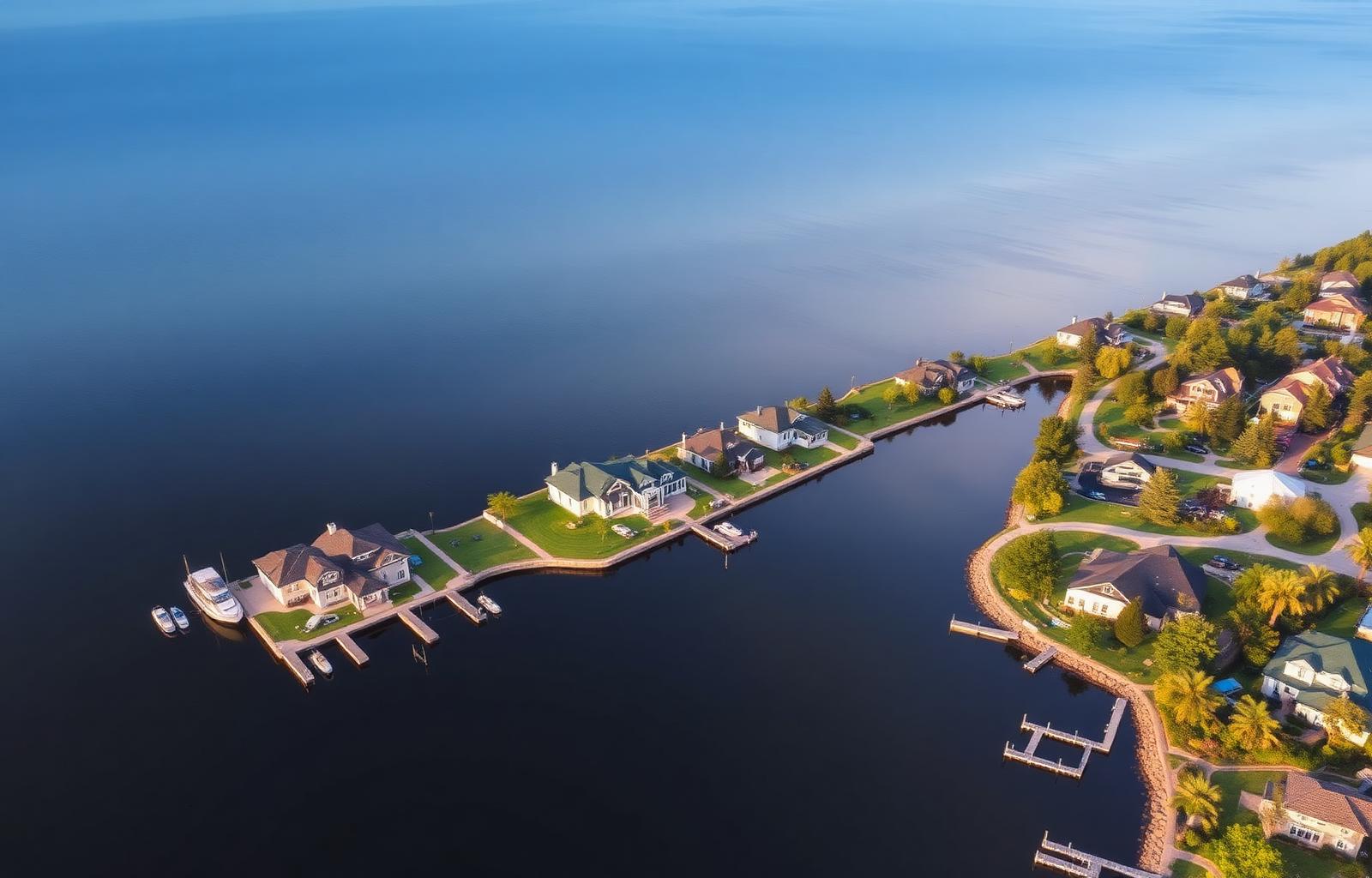
Waterfront pricing on Lake Wylie has decoupled from the broader Charlotte market in ways that matter — driven less by interest rates and more by deep-water supply, dock permitting, and a steady migration of relocating buyers.
Deep Water as the Pricing Floor
Year-round deep water — generally fifteen feet or better at the dock at winter pool — remains the single strongest determinant of value. Coves that draw down meaningfully in winter trade at a discount even when the home is identical.
The Permit Premium
Duke Energy dock permitting has tightened over the past five years. A grandfathered covered slip on a transferable permit can add six figures to a property's effective value, and replaces almost nothing in cost basis.
The Out-of-State Effect
A meaningful share of the lake's recent waterfront absorption has come from out-of-state buyers — primarily Northeast and Midwest relocations — who arrive with cost-of-living comparisons that re-anchor what 'expensive' means on the lake. The result has been a gradual but durable upward shift in deep-water pricing.
The Inventory Constraint
Most of Lake Wylie's developable shoreline is already built out or held in protected and utility-owned tracts, so meaningful new waterfront supply is limited. As demand has broadened, the basin's pricing has tracked the structural supply constraint rather than the broader Charlotte resale market — and is unlikely to decouple.
What Actually Moves a Waterfront Price
Two lakefront houses of the same size can differ enormously in value. The variables that matter most are year-round water depth at the dock, whether the dock permit is current and transferable, cove width and boat traffic, the view corridor, sun orientation, lot slope and the condition of the shoreline stabilization. None of them appear in a simple price-per-square-foot comparison.
◆Water depth at winter levels
◆Dock permit status and transferability
◆Main-channel versus cove exposure
◆View corridor and sunset orientation
◆Lot slope and shoreline condition
The State-Line Effect
Taxes and services differ across the border. South Carolina assesses owner-occupied homes at 4% and second homes at 6%; North Carolina has a flat state income tax. Schools, counties and commute patterns change too. Buyers comparing similar houses on opposite shores should run the annual carrying costs side by side before deciding which is the better value.
Frequently Asked
Questions
Why are Lake Wylie waterfront homes so expensive?
Developable shoreline is limited and much of it is already built out, while demand from Charlotte-area and out-of-state buyers has grown. Deep water and permitted docks command the largest premiums.
Does a dock add value to a Lake Wylie home?
A properly permitted, transferable dock is one of the most valuable features a lake home can have. Always confirm the permit with Duke Energy before relying on it.